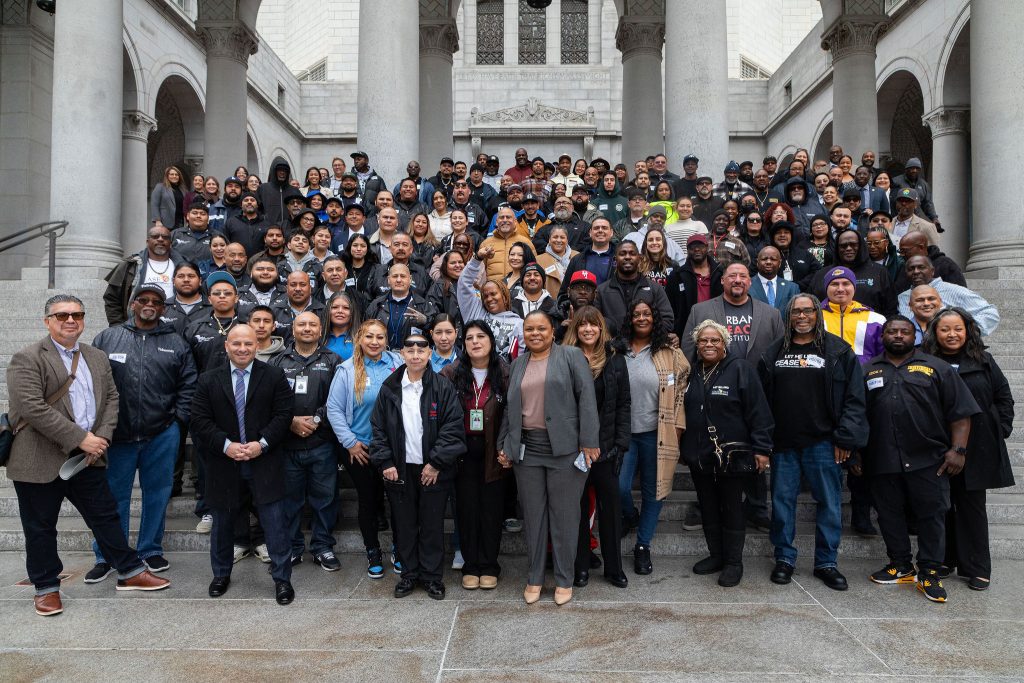
Urban Peace Institute Joins Mayor Karen Bass to Announce Nearly 27% Drop in Homicides in Neighborhoods Most Impacted by Violence in 2025
Los Angeles City Council President Marqueece Harris-Dawson and Councilmembers Eunisses Hernandez and Tim McOsker Speak in Support of Community Violence Intervention
Mayor Karen Bass joined Urban Peace Institute (UPI), the Los Angeles Violence Intervention Coalition (LAVIC), Council President Marqueece Harris-Dawson, Councilmember Eunisses Hernandez, and Councilmember Tim McOsker to announce a drop in homicides across Los Angeles. In 2025, homicides in Gang Reduction and Youth Development (GRYD) zones — neighborhoods most impacted by violence where violence intervention programs are working — fell by 27%, a significantly greater decrease than the city overall. The data shows how community violence intervention (CVI) workers are essential to reducing violence on the ground and creating lasting safety in the communities of greatest need.
“The work of our prevention and intervention partners in GRYD is a cornerstone of our comprehensive approach to public safety, and it’s delivering real results: a nearly 27% drop in all homicides within GRYD zones in 2025,” said Mayor Bass. “With LA experiencing the lowest homicides on record in nearly 60 years, the work of the City’s intervention workers and peacekeepers are changing lives, transforming communities, and helping prevent crime from occurring.”
“In the last year, Los Angeles has faced unprecedented challenges, including the flooding of our streets by the National Guard, ICE agents terrorizing our communities, and significant federal funding cuts to public safety. Yet, peacemakers prevailed and made our city safer,” said UPI’s executive director, Fernando Rejón. “With challenges ahead, we must acknowledge that peace is fragile. As our state and local governments face more budgetary challenges, we are here to say to all government and philanthropic leaders: we cannot afford NOT to invest in community violence intervention.”
“The evidence is clear—when we approach public safety through a community-driven lens, we can save lives,” said Council President Marqueece Harris-Dawson. “Thank you to the leadership of Mayor Karen Bass and each prevention worker and peacemaker who has played a key role in making our neighborhoods safer.”
“From Watts to the waterfront, across our One-Five communities, the impact of community violence intervention is felt every day. This work is not only about responding in moments of crisis, but about preventing harm before it happens, ensuring kids can walk to school, families can gather in parks, and neighborhoods can come together safely. That is what real community safety looks like. On behalf of residents across my community, thank you to the peacemakers and intervention workers who show up every day to keep our neighborhoods safe,” said Councilmember Tim McOsker
Councilmember Eunisses Hernandez said,“This significant drop in homicides proves what’s possible when the City invests in community engagement, youth development, and preventing harm before it happens instead of only reacting after tragedy strikes. In CD1, we’ve embraced that model through our Peace Ambassadors and have seen firsthand the tangible impact of this community-led safety initiative. As the Trump Administration threatens cuts to these critical violence intervention programs, Los Angeles will continue to show the country that care-first approaches save lives.”
These historic drops in violence, however, come at a time when essential funding CVI in Los Angeles is set to expire.
In 2024, UPI, in partnership with LAVIC, launched the LA Peacemakers Initiative, which has provided a critical enhancement to GRYD services. The initiative is a public-private partnership that has invested over $9 million dollars in federal and philanthropic funding to support 18 CVI agencies throughout the city. Mayor Bass was an essential part of securing some of this funding through her prior role as a member of Congress.
The increased investment has allowed CVI agencies to increase their capacity to interrupt and prevent violence. Since February 2024, LA Peacemaker Initiative agencies have:
- Responded to almost 1,700 crises, such as shootings and conflicts;
- Prevented almost 2,000 incidents from escalating to violence through rumor control and facilitating open communication;
- Enrolled almost 2,000 new participants in their programs—many of whom are youth at the highest risk of becoming involved in violence;
- Hosted thousands of community events, meetings, workshops and social activities that make our communities stronger and more connected.
Additionally, the initiative has increased the frontline CVI workforce by 32% and has provided critical capacity building and administrative support to make agencies stronger and more sustainable.
Funding for the LA Peacemakers Initiative will run out in 2026, with no replacement from Congress or state funding in sight. UPI and LAVIC call on philanthropic and government leaders to invest in the LA Peacemakers Initiative to maintain the progress that has been made.
“For over two decades, I’ve walked the streets of South Los Angeles and beyond — not as an observer, but as someone committed to stopping violence before it starts, interrupting retaliation, and helping families heal after tragedy,” said Los Angeles Violence Intervention Coalition Peacemaker, Ben “Taco” Owens. “CVI works because it is rooted in relationships, credibility, and lived experience. We take these ingredients and we train and professionalize this work with ethics and standards. If we want safer communities tomorrow, we must invest in the people who are doing the work today. Public safety must include community safety.”